
Build A Backyard Fire Pit
A backyard fire pit is the most-installed outdoor upgrade in North America and the one most often done twice.
Because the first attempt skipped the planning or the burner doesn't match the enclosure. The fire media sits too deep and smothers the flame. The propane connection runs in the wrong direction.
This guide walks you through the project the way installers approach it: choose your path first, source the right components second, and build once. Whether you're dropping a pre-built gas fire pit on a patio in an afternoon or laying block and installing a custom burner kit over a weekend, the planning decisions are the same.
⏱️
Time
Afternoon–3 weekends
💰
Budget
$300–$3,500
🛠️
Skill
Beginner–Intermediate


What You'll Build
A backyard fire pit is a gas or wood-burning fire feature designed as a permanent or semi-permanent part of your outdoor living space.
At the center is the burner — a stainless steel ring, H-burner, or pan burner that delivers fuel to the flame. Around the burner sits fire media (glass, lava rock, or ceramic logs) that distributes and shapes the fire. Around the media sits the enclosure — either the factory housing of a pre-built fire pit or a custom surround you build from stone, concrete block, or steel.
This project has two distinct paths and the right one depends on how much you want to customize:
Path A — Pre-built fire pit: You buy a complete, factory-built gas or propane fire pit. It arrives mostly assembled. You position it, connect the propane tank, add fire media, and light it. Total time: one afternoon. Zero masonry, zero gas fittings beyond the tank connection.
Path B — Custom DIY enclosure with burner kit: You build the surround yourself from stone, block, or steel, then install a standalone burner kit inside it. More work, more cost, more decisions — but the result is a fire pit that matches your patio's exact layout, fits a specific footprint, and can be hard-lined to natural gas for unlimited run time.
Both paths land at the same destination: a fire feature that runs clean, looks intentional, and will be running 15 years from now if you buy the right components.
Step 1 - Choose Your Fire Pit
The first decision is whether you're buying a pre-built unit or building a custom enclosure. Be honest with yourself about time, budget, and how important a custom fit is. A great pre-built fire pit will outperform a mediocre DIY build every time.


🧱 CURATED PRODUCT GRID — Path A: Pre-Built Fire Pits (4 products)
- Round propane fire pit, 36–40" — Best for: standard backyard gathering
- Square propane fire pit, 24–30" — Best for: contemporary patio design
- Wood-burning fire pit with spark screen — Best for: campfire experience
- Fire pit table, chat height — Best for: dual function as patio surface
🧱 CURATED PRODUCT GRID — Path B: DIY Burner Kits (4 products)
- Match-light burner kit, 12–18" — Best for: small round or square builds
- Spark ignition burner kit, 18–24" — Best for: mid-size builds, no wiring
- Electronic ignition burner kit, 24–36" — Best for: premium builds, safety shutoff
- CSA-certified burner kit — Best for: permitted installs, code-required jurisdictions
Not sure which path fits your project? Read our Fire Pit Buyer's Guide for 2026 → or browse all fire pit burner kits → for the DIY path.
Step 2 — Plan Your Fuel System
This step is critical for Path B (custom builds) and worth understanding for Path A as well, since fuel-system decisions affect long-term operating cost.
The two variables that matter most: fuel type (propane vs natural gas) and ignition system (match-light vs spark vs electronic). If you're buying a pre-built fire pit, this decision is mostly made for you — verify the ignition type and whether a natural-gas conversion kit is available before you buy.
For DIY builds, ignition type is a standalone purchase decision:
Match-light: Turn the key valve, light with a long lighter. No wiring, no batteries, no additional components. Most affordable. Best for simple builds where you'll be lighting the fire yourself from a few inches away.
Spark ignition: A push-button piezoelectric spark — same mechanism as a gas grill igniter. No wiring, no batteries (piezo is mechanical). One push to light. Step up from match-light for everyday use.
Electronic ignition: A 24V or battery-powered module that sparks the gas and includes a flame-failure safety shutoff — gas automatically cuts if the flame extinguishes for any reason. The right choice for permanent builds, family homes with children, and any install where safety automation matters.
🧱 CURATED PRODUCT GRID — Ignition Systems & Accessories (3–4 products)
- Safety pilot kit with thermocouple — Backup safety for any gas system
- Key valve, 1/2" — Standard key valve for manual systems
- Flexible gas connector kit — Propane hose and fittings for DIY hookup
- Electronic ignition upgrade module — Add electronic ignition to an existing install
Propane vs natural gas note: If there's any chance you'll hardline natural gas to this fire pit in the next five years, buy a burner kit that includes or offers a conversion orifice. Retrofitting a non-convertible kit is an unnecessary replacement cost.
Step 3 — Choose Your Fire Media
Fire media is the material that sits over the burner and shapes the visual character of the fire. This step applies to all gas and propane builds — both pre-built fire pits and custom DIY enclosures.
Three main options, each with a distinct look:
Fire glass is the contemporary standard — tempered glass in dozens of colors, available in reflective (mirrored, maximum visual drama) and non-reflective (solid color, tumbled finish) versions. Works in any gas fire pit. Easiest to clean. Most popular for modern and transitional designs.
Lava rock is the traditional choice — porous volcanic rock in natural black, red-brown, or grey. More affordable than fire glass, looks natural and rustic, works in wood-burning and gas fire pits. The classic choice for traditional and organic landscape styles.
Ceramic logs mimic a wood fire without the smoke, ash, or firewood management. Works best in larger gas fire pits where the scale of the logs reads naturally. Often mixed with fire glass for a layered effect.
🧱 CURATED PRODUCT GRID — Fire Media (4–5 products)
- Reflective fire glass, 1/4" — Best for: modern gas fire pits, maximum visual drama
- Non-reflective fire glass, 1/4" — Best for: subtle, contemporary look
- Black lava rock, 1–2" — Best for: traditional and rustic fire pits
- Ceramic gas logs set — Best for: wood-fire aesthetic without wood burning
- Pre-mixed fire glass blend — Best for: curated multicolor look
How much fire media do you need? A 2-inch layer over the burner is the standard depth. Too shallow and the burner ports are exposed; too deep and the flame is smothered. Our Fire Glass Sizing Guide → walks through the calculation by pit size.
Step 4 — Add Accessories
A fire pit without a cover ages in one season. A fire pit with a wind guard runs in conditions where it otherwise wouldn't. These four categories of accessories are the difference between a fire pit that lasts five years and one that lasts twenty.
🧱 CURATED PRODUCT GRID — Accessories (4–5 products)
- Fire pit cover, fitted — Protect media and burner during off-weeks
- Tempered glass wind guard — Maintain flame in breezy conditions
- Burner cover / steel lid — Convert DIY fire pit to a flat table surface when off
- Fire pit screen / spark guard — Required for wood-burning setups
- Fireside tools set — Poker, brush, tongs for wood-burning pits
The cover is non-negotiable. Spiders nest in gas orifices during off-weeks and block the burner ports. Leaves and debris fill the media and trap moisture. A fitted cover from the manufacturer costs $75–$250 and prevents the #1 cause of fire pit service calls.
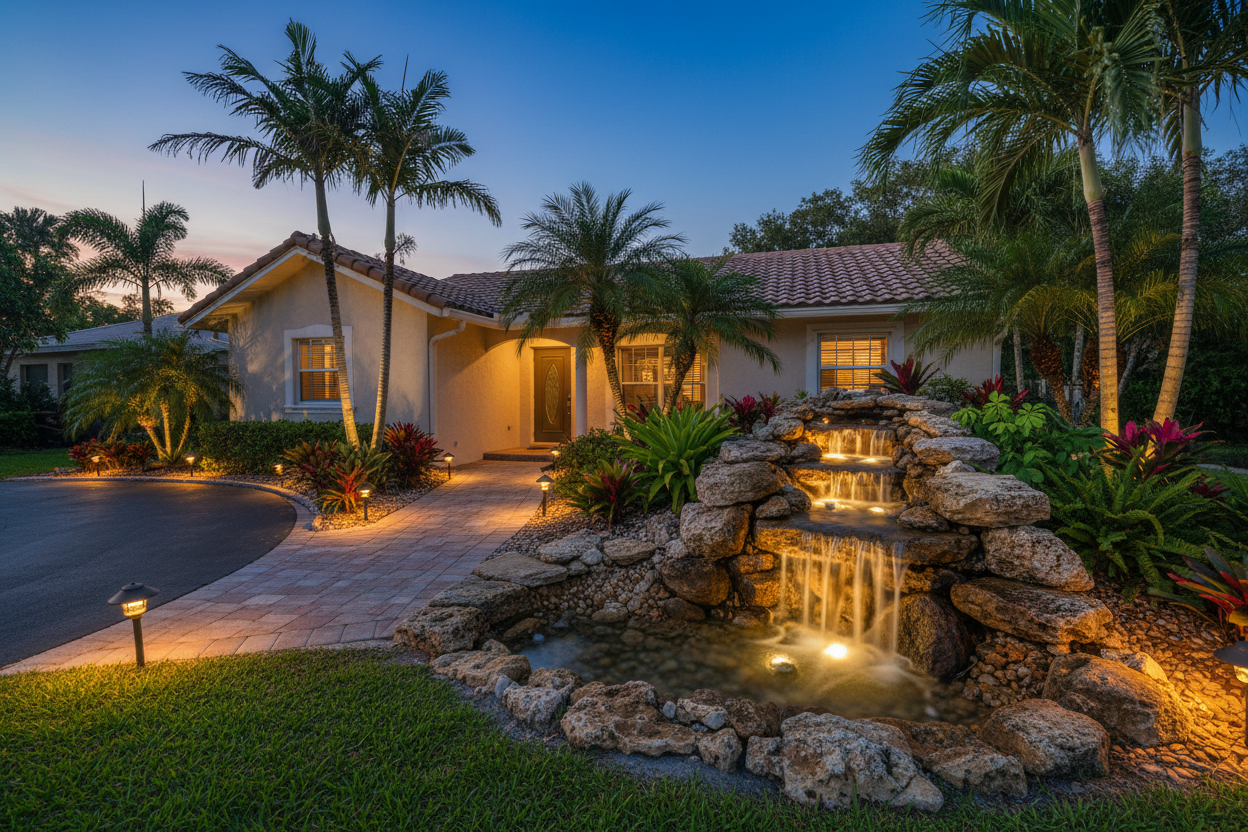

DIY Pondless Waterfall Kit Planning Guide for Beginners
This guide walks you through the four planning steps for building a Pondless Waterfall Kit in the order they actually need to happen.


